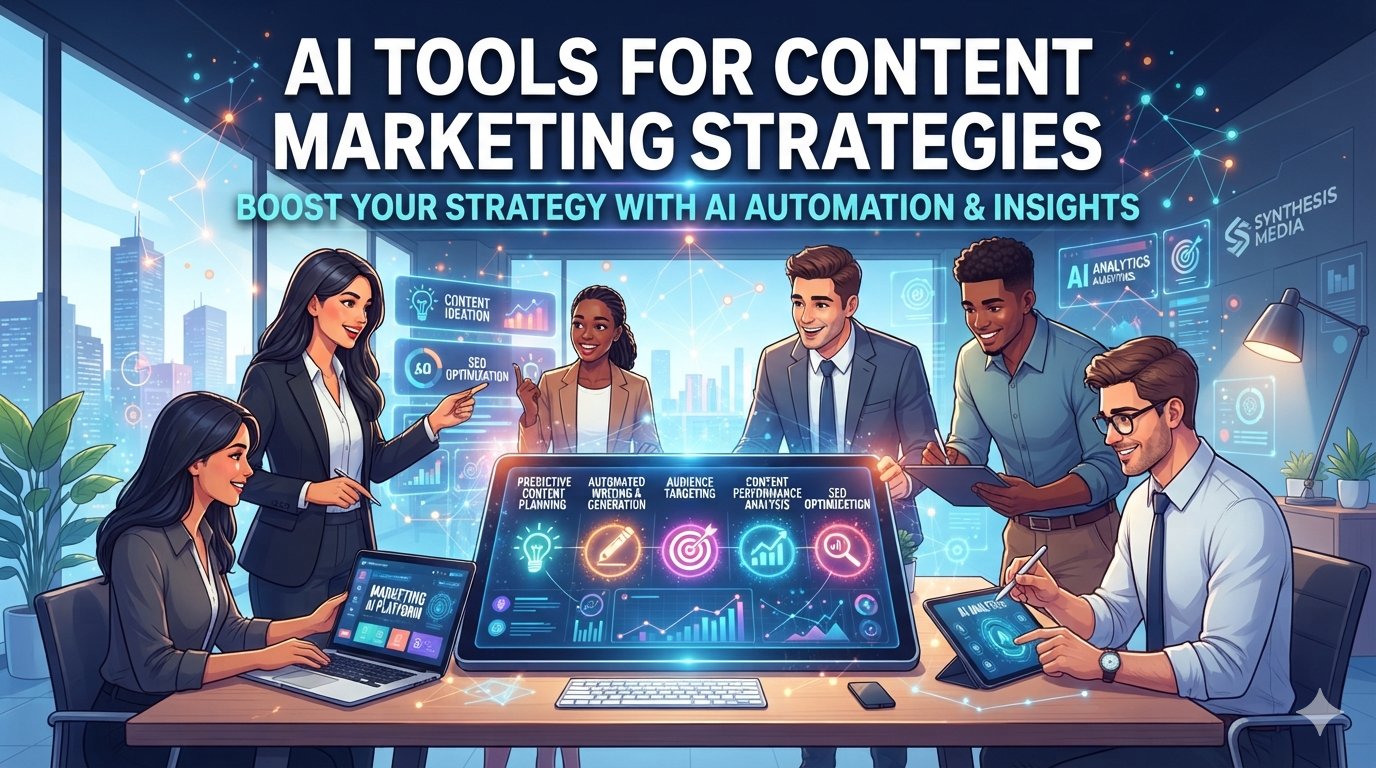
AI content marketing has moved well beyond simple novelty, becoming a genuinely practical part of how modern marketing teams plan, produce, and refine content at scale and speed across channels. Understanding which AI tools actually deliver value helps marketers integrate AI thoughtfully rather than chasing every new release.This guide walks through how AI has evolved within content strategy, the tool categories reshaping digital marketing, and practical ways to maintain authenticity while incorporating automation into everyday workflows and processes.
The role of artificial intelligence (AI) in marketing has shifted considerably over recent years, gradually moving from simple task automation towards genuinely strategic decision support for entire teams.
Earlier, AI marketing workflows used to focus mainly on drafting assistance, but modern tools now support much broader strategic planning, from initial content ideation through to precise distribution timing decisions.
AI content strategy tools in NZ increasingly handle keyword clustering and search intent mapping, processing large volumes of data that would take human researchers considerably longer for a manual analysis.
Marketing teams are often short on time and resources, but thankfully there are a number of new tool categories that can help with various aspects of content marketing.
Automated SEO copywriting tools now assist with draft creation, social media copy, and meta tagging, significantly speeding up production without necessarily replacing human editorial judgement entirely or completely.
Predictive analytics tools help marketers anticipate audience behaviour and segment users more precisely, informing content decisions based on genuine data patterns rather than guesswork or assumptions alone.
AI marketing workflows increasingly include automated SEO auditing, internal linking suggestions, and content gap analysis, helping teams identify opportunities that manual review might otherwise overlook entirely or miss.
Successfully adopting AI tools requires carefully balancing efficiency gains against the genuine risk of producing generic, forgettable content that fails to connect with the real readers.
Search engines increasingly prioritise E-E-A-T signals when ranking overall content quality; a human-in-the-loop approach keeps fact-checking, tone calibration, and real expertise at the centre.
Digital content automation without careful oversight risks producing repetitive or derivative material, potentially triggering duplicate content issues and undermining a brand’s genuine editorial credibility and reputation over time.
Successfully integrating AI tools typically follows a structured sequence, from initial research and drafting through to careful human review and final publication stages.Working with a digital marketing agency in Auckland can help businesses build workflows that genuinely balance efficiency with authentic, brand-appropriate content quality and consistency.
Thoughtfully combining AI tools with genuine human oversight helps marketing teams produce content that is both efficient to create and genuinely resonant with real, engaged audiences over time and across channels.
Search engines generally do not penalise AI-assisted content specifically, but they do penalise low-quality, unhelpful, or duplicate material regardless of how it was originally produced. Genuine editorial oversight and factual accuracy remain essential regardless of which tools were used.
This model involves AI generating initial drafts or research, while human editors carefully review, fact-check, and refine the output before publication. It combines the speed of automation with the judgement, nuance, and accountability that only humans can genuinely provide.
Starting small with a single tool, such as AI-assisted keyword research or draft generation, allows businesses to genuinely test value before expanding further into other areas. Measuring time saved and content performance carefully helps justify additional investment over time.
Purely AI-generated copy can lack genuine brand voice, nuanced understanding, and factual accuracy without careful human review and oversight. Over-reliance also risks generic, templated content that fails to genuinely differentiate a brand from competitors in a crowded market.


AI content marketing has moved well beyond simple novelty, becoming a genuinely practical part of how modern marketing teams plan, produce, and...
continue reading
TikTok is no longer a platform brands can treat as optional. With a discovery algorithm that gives any account the potential to...
continue reading
Most small business owners in New Zealand don't need customers from across the country; they need the ones in a few suburbs...
continue reading
New Zealand Level 1, Suite 10 124, Symonds Street, Auckland 1010

SMEGOWEB has solutions to help your business grow online.
 SMEGoweb - New Zealand
Lvl 1, Suite 10 124 Symonds
Street, Auckland 1010

